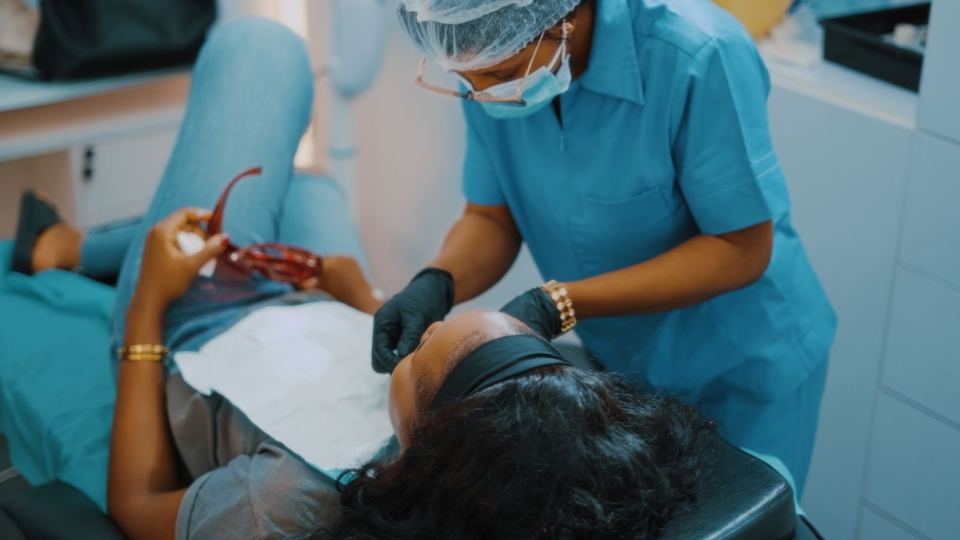
How often should you have a dental check-up?
Every six months is the figure most people have heard. The right interval depends on your own teeth and gums, and your dentist sets it with you.

Most people have heard that you should see a dentist every six months. It is a reasonable rule of thumb, but it is not the same for everyone. Some people need to be seen more often, and some people with healthy mouths can safely go longer. The interval is something your dentist decides with you after looking at your teeth and gums.
Why go when nothing hurts
Tooth decay and gum disease are usually painless at the start. By the time a tooth aches, the decay has often reached the nerve, and the treatment is longer and costs more. A check-up is how problems are found while they are small: a filling instead of a root canal treatment, a cleaning instead of a loose tooth.
Who may need to be seen more often
Your dentist may ask to see you every three or four months if you:
- have gum disease, or gums that bleed when you brush
- have had several fillings or new decay in the last few years
- have diabetes
- smoke or use tobacco
- are pregnant
- wear braces or dentures
- often have a dry mouth, which some medicines cause
Children
A child’s first visit should be when the first teeth come through, and no later than the first birthday. After that, children are usually seen at least once a year, and more often if they have had decay. Early visits also let a child get used to the dentist before any treatment is needed.
What happens at a check-up
- The dentist asks about your general health, any medicines you take and any problems you have noticed.
- Your teeth, gums, tongue and the inside of your cheeks are examined.
- X-rays are taken if the dentist needs to see between the teeth or below the gum.
- Tartar is removed with scaling and polishing if it has built up.
- You are told what was found, what treatment is advised if any, and when to come back.
Between visits
- Brush twice a day with a fluoride toothpaste, last thing at night and at one other time.
- Clean between your teeth once a day with floss or interdental brushes.
- Keep sugary food and drinks to mealtimes.
- Do not wait for your next appointment if something changes. A tooth that becomes sensitive, gums that bleed, or a sore in the mouth that has not healed after two weeks should be looked at.
If you cannot remember your last check-up, that is usually a sign that it is time for one.
This article is general information and not a diagnosis. If you are in pain, or worried about your teeth or gums, see a dentist.